





11 Best Finviz Alternatives For Stock Screening in 2026
MarketDash Editorial Team
Author
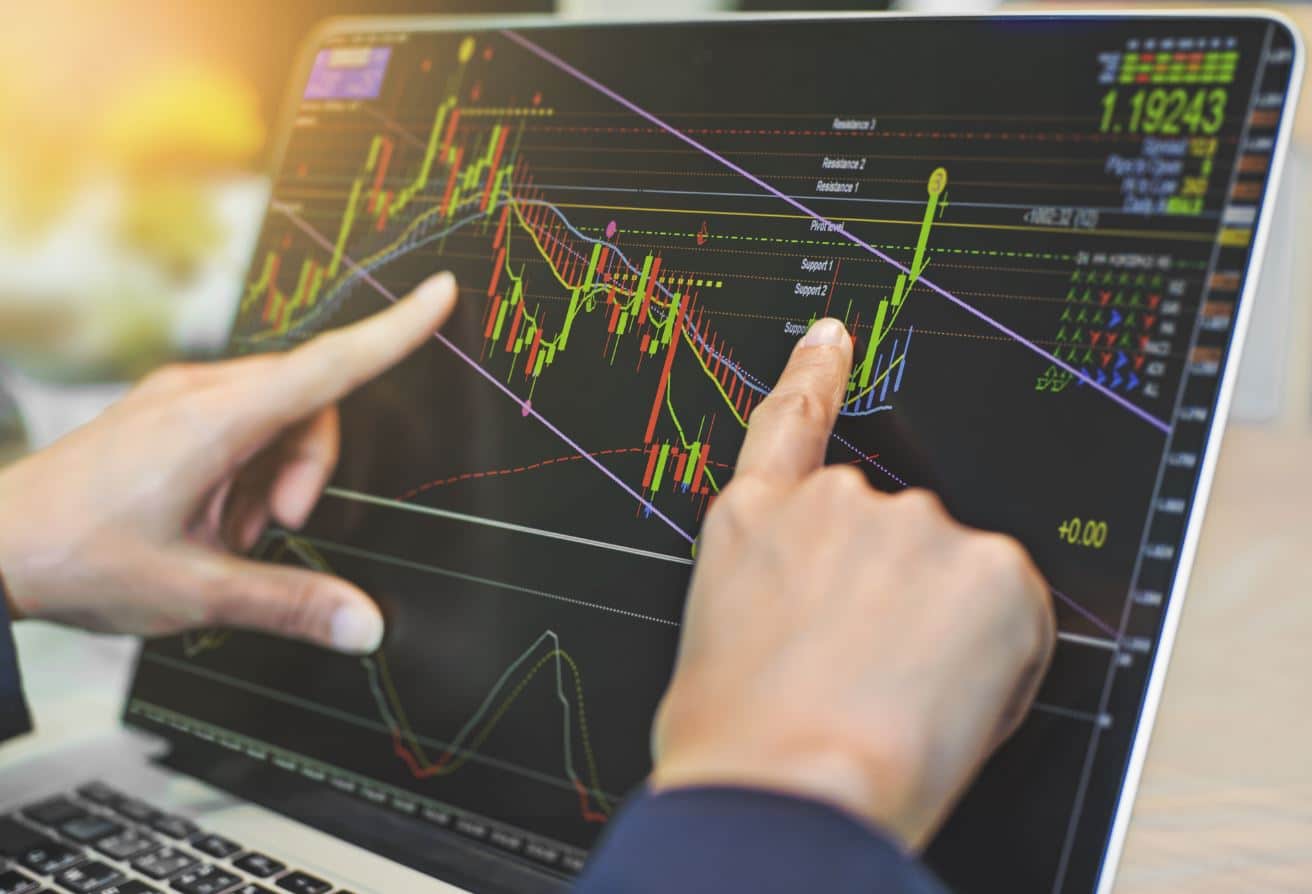
When you ask How to Predict Stocks, your choice of screeners and data feeds often decides whether you catch a winner or follow noise. Maybe you spend hours in Finviz and still miss breakouts or waste time on false signals—sound familiar? This piece helps you quickly discover superior Finviz alternatives, sharpen your stock screening with smarter filters and watchlists, and spot high-potential trades faster with better scanners and alerts.
MarketDash's market analysis picks up where basic screeners leave off, offering clean visual signals, simple scans, and ready-made filters so you can find opportunities faster and cut research time.
Summary
- Screeners that cover over 8,000 stocks surface deep small-cap and micro-cap names as readily as large caps, which raises the risk of thinly traded issues unless you add hard liquidity and orderability filters.
- Access to 70+ technical indicators provides ample building blocks for momentum and volatility filters, but stacking several correlated oscillators can create the illusion of corroboration rather than independent confirmation.
- When screening scales into a repeatable strategy, three failure modes typically arise: correlated indicators and loose thresholds produce false positives; exported lists become disconnected from trade plans; and the lack of human adjudication allows context, such as earnings or restricted floats, to slip through.
- Public platforms with over 1 million monthly users can experience slower response times and strained support during market events, resulting in inconsistent real-time alerts and live behavior when timing is most critical.
- Options-focused workflows require explicit optionability and liquidity signals, given that over 70% of options traders use online platforms to source stocks and roughly 50 million options contracts trade daily; failure to flag tight bid-ask spreads or ADOV can jeopardize execution.
- Treat a new screener like a lab: run a two- to four-week thesis test and track four metrics (conversion rate, average triage time, slippage on fills, and false positive rate) to determine whether it shortens research cycles and increases executed ideas.
- This is where MarketDash's market analysis fits in: it offers clear visual signals, simple scans, timestamped signal snapshots, and analyst-led curation, enabling teams to convert broad screens into ranked, trade-ready ideas with clear entry and accumulation plans.
What Is Finviz, and How Does It Work?

Finviz moves fast and finds a lot, but its speed and breadth create both opportunity and noise, so you need rules to separate signal from clutter. Below, I explain what drives its breadth, how the indicator depth can both help and mislead, and practical workflows that turn raw screener output into tradable ideas.
How broad is the stock universe, really?
StockBrokers.com reports that Finviz offers over 8,000 stocks to screen, which explains why it surfaces deep small-cap and micro-cap names as readily as large caps. That reach is a strength if your edge is digging up overlooked names, but it also means your screen will return thinly traded issues unless you explicitly screen for liquidity and orderability.
How many technical tools are at your disposal?
StockBrokers.com notes Finviz provides access to 70+ technical indicators, giving you plenty of building blocks to define momentum, trend, and volatility conditions. The catch is simple: more indicators do not equal more confidence, because many move together. Stacking five related oscillators can create an illusion of corroboration when you really have one underlying signal repeated five times.
When should a screener be a starting point, not the finish line?
Most traders treat the screener as the research funnel because it is fast and familiar. That works early on, but as lists grow, the real cost appears, candidate by candidate: time wasted on names with execution risk, late-breaking news that invalidates a setup, or watchlists crowded with low-float pumps that never let orders fill. This pattern appears when traders prefilter by exchange, price, and float, then hand-list to a news scanner; it speeds sourcing but focuses on low-liquidity names that do not convert into clean entries.
What breaks when you scale screening into a strategy?
As screening escalates from a hobby to a repeatable process, three failure modes emerge. First, correlated indicators and loose thresholds lead to false positives; second, exported lists become a disconnected task without trade plans; third, the lack of human adjudication means important context, such as imminent earnings or restricted floats, is missed. You can paper over these with rigid filters, but you cannot automate judgment that you do not codify.
How do you bridge from raw lists to tradable setups?
Most traders start with raw screen results because it is efficient. That familiarity is valid, but it hides a cost: wasted capital and time when many candidates never meet execution or risk criteria. Platforms like MarketDash address that gap by combining analyst-led curation with AI augmentation, delivering hand-curated weekly opportunities, top rankings, and four report types, including clear entry and accumulation plans. This reduces false positives and provides traders with actionable next steps instead of raw leads.
What practical rules keep a screener from becoming a trap?
Set hard liquidity floors, require a minimum average daily dollar volume, and add a float cap only when you intend to manage the trade actively. Cross-check earnings and news timestamps before sizing a position, and always simulate fills against current bid-ask spreads. Use multi-timeframe filters to weed out intraday noise, and avoid stacking highly correlated indicators as if they were independent votes. Treat the screener as a high-throughput sampler that requires a human decision layer before capital is committed.
A quick image to hold on to
Think of a screener as a powerful metal detector on a crowded beach; it will beep at everything that looks like metal, but you still need the loupe and the patience to find the coin, not the bottle cap.
That surface-level efficiency is useful, but what many traders quietly discover next is more revealing.
Why Do Traders Look for Finviz Alternatives?
Traders seek Finviz alternatives because the cost of imperfect tools shows up as missed trades, wasted hours, and growing doubt in signals. In practice, people want screens that provide live, predictive, and exportable insights, not another broad list that requires cleanup.
Finviz is a popular tool for stock screening, but its drawbacks prompt investors to explore alternatives with enhanced capabilities. Based on user feedback on platforms such as Stockbrokers.com and Trustpilot, many users are frustrated by specific shortcomings that hinder their trading efficiency.
Limited Access to Real-Time Data in the Free Version
One major reason traders turn away from Finviz involves the delays in market information available without a paid subscription. In the basic plan, updates such as stock prices, visual maps, and scan results often lag actual market movements by 15 to 20 minutes for certain exchanges. This setup works fine for casual investors who check positions occasionally, but it creates significant hurdles for those involved in rapid trades where every second counts.
User reviews on Stockbrokers.com highlight that these data-delivery delays disadvantage free users compared to competitors that offer instant updates. Similarly, on Trustpilot, several traders report notification delays of a few minutes, which can lead to missed opportunities in volatile sessions. As a result, active market participants often seek platforms that deliver live feeds from the outset, enabling them to respond promptly to price movements and news events without requiring upgrades.
Absence of AI-Powered Insights and Predictive Tools
Finviz falls short in incorporating artificial intelligence to analyze patterns or anticipate future movements, a feature that's becoming standard in newer screening software. Without these smart algorithms, users must manually sift through data to identify potential trades, missing automated suggestions that could highlight emerging trends or risks based on historical and real-time data.
Feedback from Trustpilot users indicates a desire for more advanced forecasting, with some noting that alternatives such as TradingView offer better automated detection than Finviz. Stockbrokers.com reviews also highlight this gap by praising rivals for their advanced analytics, which help predict outcomes without extensive user effort. Traders, especially those relying on data-driven strategies, therefore migrate to tools that use machine learning to provide proactive alerts and deeper market insights, enhancing decision-making in complex environments.
Restricted Customization and Technical Analysis Capabilities
Even with its premium tier, Finviz offers only basic options for tailoring scans and charts, lacking the extensive adjustments seen in more sophisticated alternatives. Users can apply filters through simple menus, but deeper modifications—such as advanced statistical breakdowns or exporting large datasets—are either limited or require additional steps, making the process feel rigid for detailed work.
On Trustpilot, reviewers frequently mention struggles with interface tweaks, such as renaming lists or improving the visibility of chart elements, which hampers usability for personalized setups. Stockbrokers.com evaluations note that while the tool is user-friendly at a basic level, its charting remains elementary with few overlays and indicators, prompting traders to look elsewhere for robust technical tools. This drives professionals toward platforms with flexible configurations, enabling intricate analysis and seamless integration into their unique trading workflows.
What about notifications, mobile reliability, and trust?
Traders tell us the emotional cost in simple terms: it is exhausting to trust a tool that notifies late or misses a move. This is not a minor annoyance; it breeds hesitation. When you hesitate, you reduce position sizes, miss momentum entries, or worse, exit winners too early. Tools that combine live feeds, predictive signals, and human oversight remove that chronic doubt and let you act with a clear plan.
A quick image to hold on to
Think of alternative platforms as moving from a crowded public bulletin board to a focused analyst briefing, where someone has already removed the noise and highlighted the plausible plays.
That solution sounds final, but there's one hidden tradeoff worth watching next.
Related Reading
- What is Top-Down Analysis
- Fundamental vs Technical Analysis
- Portfolio Risk Assessment
- Fundamental Stock Analysis
- Equity Analysis
- How to Identify Undervalued Stocks
- Financial Statement Review
11 Best Finviz Alternatives & Competitors in 2026
These 11 tools together cover every practical route away from a single screener: from explainable AI and hand-curated picks to community-powered charting and real-time newsfeeds, so you can match a platform to a specific workflow rather than forcing one tool to do everything. Pick by the problem you actually need solved—deep fundamental triage, live trade signal generation, options flow analysis, or chart automation—and the right alternative becomes obvious fast.
1. MarketDash

MarketDash is a cutting-edge platform that delivers clear, actionable insights into stock valuations and fundamentals using artificial intelligence. It simplifies complex financial data with traceable AI explanations, proprietary models, and intuitive visualizations, making it a strong contender for those moving beyond basic screens to deeper, value-oriented research without overwhelming complexity.
Key Features
- Proprietary Discounted Cash Flow (DCF) modeling to estimate intrinsic stock values and highlight potential upside or downside.
- AI-powered analysis of competitive moats, SWOT breakdowns, and risk assessments for comprehensive company evaluations.
- Visualized financial statements, including detailed balance sheets, cash flow quality breakdowns, and trend comparisons.
- Tracking of Wall Street analyst recommendations, price targets, earnings estimates, and insider activity.
- Curated weekly stock picks, real-time valuation scans, and tools for identifying undervalued opportunities.
- Customizable dashboards with historical metric graphs and peer comparisons.
Pros
- Explainable AI that provides transparent reasoning behind insights, building user confidence.
- Clean, intuitive interface that saves time on research while delivering professional-grade depth.
- Strong focus on fundamental quality and long-term value, ideal for informed decision-making.
- Responsive customer support that incorporates user feedback for improvements.
- High user satisfaction for boosting trading performance and understanding.
Best Use Cases
- Screening for undervalued stocks using intrinsic value calculations and valuation metrics.
- Conducting in-depth fundamental reviews before entering positions.
- Monitoring analyst consensus and insider trends for sentiment signals.
- Building watchlists with visualized data for ongoing portfolio oversight.
- Exploring curated picks for medium-term or long-term investment ideas.
Best For
- Value investors prioritize fundamentals and intrinsic valuations over technical signals.
- Intermediate to experienced users wanting AI assistance without black-box opacity.
- Beginners seeking an approachable yet powerful tool to learn stock analysis.
- Long-term holders aim to spot high-quality companies with sustainable advantages.
- Anyone frustrated with scattered data sources needs a centralized, efficient research hub.
2. TradingView
TradingView stands out as a robust platform for screening securities, celebrated for its sophisticated graphing tools, real-time market monitoring, and a wide range of analytical indicators. In contrast to Finviz's restricted free offerings, this service delivers complimentary access to live filtering and personalized setups, making it ideal for users seeking enhanced visualization and community input in their research.
Key Features
- Extremely adaptable graphs featuring numerous analytical markers for detailed examination.
- A collaborative network where participants exchange tips and approaches.
- Complimentary entry to current information, with optional enhancements for additional instruments.
- Tailored control panels and extensive personalization for dedicated investors.
- Global coverage, including stocks, currencies, and digital assets for diverse scanning.
3. Stock Rover
Stock Rover caters to those planning for the long haul, emphasizing core evaluations, fund oversight, and asset management. It provides comprehensive details on equities, exchange-traded funds, and investment vehicles, positioning it as a top choice over Finviz for individuals seeking undervalued opportunities through in-depth metrics.
Key Features
- Sophisticated filtering using core standards like income expansion, profit standards, and worth assessments.
- Asset monitoring and refinement instruments for sustained financial growth.
- Past records and monetary comparisons for comprehensive studies.
- Intuitive layout with adjustable panels for asset reviews.
- Integration of news feeds and sentiment rankings to enrich fundamental insights.
4. Yahoo Finance
Yahoo Finance is a no-cost option for sifting through equities, delivering essential investigative resources, financial statistics, and selection functions. Although it lacks some premium capabilities of subscription-based rivals, its free live access appeals to occasional users and newcomers exploring the market.
Key Features
- Straightforward selection tool with essential analytical and core sieves.
- In-depth tracking, including past figures, profit disclosures, and balance sheets.
- No-charge profile setup for basic selection needs, with no upgrades.
- Streaming quotes and ESG metrics for simple evaluations.
- Watchlists and portfolio tools to efficiently monitor holdings.
5. TC2000
TC2000 is a strong contender for equity screening, offering robust personalization, superior charting, and selection tools for users who require versatile core and analytical reviews. Its focus on user-defined setups makes it a preferable pick for adapting workflows to specific needs.
Key Features
- Highly adjustable selection system with analytical and core parameters.
- Personalized arrangements and in-depth tools for unique investigative processes.
- Live feeds via subscription for intraday and intermediate investors.
- Condition-based scanning and formula creation for complex queries.
- Integrated charting with indicators and multi-platform access for smooth use.
6. TrendSpider
TrendSpider excels among selection platforms for those relying on chart-based reviews, leveraging artificial intelligence to identify formations and refine tactics without manual input. This automation sets it apart from Finviz, offering smarter detections to spot opportunities more efficiently.
Key Features
- Machine learning-driven chart reviews with automatic line spotting.
- Immediate notifications and superior graphing for short-term participants.
- Historical testing to evaluate various market approaches.
- Multi-timeframe scanning for combined conditions across intervals.
- Dynamic alerts and unique chart styles, such as raindrop visuals, for enhanced insights.
7. Benzinga Pro
Benzinga Pro delivers a comprehensive solution for active market participants, emphasizing swift news delivery, audio broadcasts, and customizable notifications to stay ahead of developments. Unlike Finviz's delayed updates in the basic tier, this platform prioritizes immediate access to breaking stories and sentiment analysis, supporting quick responses in dynamic trading environments.
Key Features
- Lightning-fast newsfeed with advanced filtering options for targeted updates.
- Audio squawk box providing live commentary on significant events.
- Real-time alerts, scanners, and sentiment indicators for market-moving items.
- Detailed calendars covering earnings, economic releases, and more.
- Watchlists and signals to efficiently monitor price changes and opportunities.
8. Trade Ideas
Trade Ideas uses advanced artificial intelligence to continuously scan markets and suggest potential setups based on statistical patterns and risk assessments. This automation goes beyond manual filtering in Finviz, offering proactive recommendations that adapt to current conditions for day and swing participants.
Key Features
- AI engine (Holly) is generating real-time trade suggestions and probability rankings.
- Extensive backtesting capabilities to validate strategies historically.
- Customizable scans with real-time alerts and brokerage integration.
- Community-shared ideas and competitive tournaments for additional insights.
- Visual tools like stock races and channel bars for momentum detection.
9. Ziggma
Ziggma provides an intuitive approach to managing investments and discovering stocks, with simplified metrics and educational elements ideal for those building positions gradually. It focuses on clear visualizations and score-based rankings, making it more accessible than Finviz's complex setups for everyday users.
Key Features
- Proprietary stock scoring system evaluating quality across multiple factors.
- Efficient screener with sliding scales for quick fundamental filters.
- Dividend and cash flow trackers projecting income streams.
- Smart alerts for diversification, risk, and yield adjustments.
- Portfolio simulator to preview trade impacts before execution.
10. Market Chameleon
Market Chameleon specializes in detailed options data and earnings-related insights, offering tools to examine volatility, unusual activity, and historical reactions. This depth supports strategies around events, providing more specialized analytics than general screens in Finviz.
Key Features
- Unusual options volume scanner highlighting potential shifts in interest.
- Comprehensive earnings calendars with past price movement comparisons.
- Strategy-specific options screeners with backtested performance.
- Implied volatility rankings and pre/post-market data views.
- Custom watchlists and order imbalance tracking for close monitoring.
11. MarketSurge
MarketSurge, from Investor's Business Daily, incorporates proprietary ratings and pattern detection to identify high-potential growth names. It builds on proven methodologies with modern enhancements, such as earnings trendlines, appealing to those seeking structured approaches beyond basic Finviz visualizations.
Key Features
- Exclusive 1-99 composite ratings combining fundamentals and technicals.
- AI-assisted base pattern recognition on interactive charts.
- Curated lists like Growth 250 for high-expansion candidates.
- Earnings line visualization and institutional accumulation indicators.
- Extensive database with real-time updates and industry group metrics.
Think of these platforms like tools in a mechanic’s chest; some are precision torque wrenches for careful builds, others are impact tools for fast fixes, and the smartest traders keep both kinds but stop pretending one can do every job.
But the wrench you pick today can quietly shape every position you take tomorrow.
Factors to Consider When Choosing the Best Finviz Alternatives

Choose tools that prove their work publicly, keep your signals reproducible, and match execution quality to your risk tolerance. Focus on data provenance and model transparency, reproducibility and auditability, execution reliability under stress, and whether the platform's pricing actually buys less noise and more conviction.
How transparent are the data sources and models?
You should demand clear answers about where prices, fundamentals, and news come from, how often they update, and how the vendor reconciles discrepancies across feeds. When a platform shows model inputs, version IDs, and a plain-English explanation for a ranking or signal, you can treat its output as evidence rather than opinion.
That matters because traders are moving toward richer toolsets, as shown by LevelFields' 2025 report: Finviz alternatives are gaining popularity as traders and investors seek more advanced features such as real-time news, deep customization, and better fundamental analysis tools, which means transparency is now a practical differentiator, not a luxury.
How do you make sure a signal can be trusted tomorrow?
Look for reproducibility features, not marketing copy. The platform should snapshot the exact input set and model version when it issues a trade candidate, allow you to rerun the same filter against historical data, and provide clean exports for independent backtests. Treat these snapshots like lab notes in research, because without them, you cannot audit why a trade failed or compare competing hypotheses over time. Request timestamped signal archives, seedable backtest runners, and a clear record of any data revisions that retroactively change past signals.
What will happen to execution and alerts when markets spike?
Check the operational guarantees: websocket feeds, API rate limits, message queuing behavior, and historical latency profiles during events that matter, for example, earnings windows or macro shocks. Low-latency charting is neat, but what counts is whether your alerts fire on the first quote change, not the tenth. Also, verify broker integrations and order-routing behavior, because an alert that cannot be translated into a clean fill destroys the practical value of any screening edge.
Most traders stitch free screens, a news feed, and ad hoc spreadsheets because that approach is familiar and cheap. That works until a missed timestamp or a late data revision turns a carefully sized position into a surprise loss, and time spent reconciling differences becomes the dominant cost. Platforms like MarketDash, with hand-curated weekly opportunities, DCF-backed valuations, explainable AI annotations, and exportable report types, close that gap by providing traceable signals and clear entry and accumulation plans, reducing triage time from days to hours while keeping human judgment in the loop.
How will the tool fit into your day-to-day workflow?
Ask whether alerts can be batched, throttled, or grouped by thesis, so your inbox is not a guessing game. Look for workspace permissions, shared watchlists with comment threads, and export formats that map cleanly to your portfolio tracker or trade blotter. If the platform forces copy-paste or spits out hundreds of single-point alerts with no context, you will spend your edge on admin, not on execution.
Does the pricing buy actual marginal value?
Free screeners are useful for sampling ideas, but they often hide capability gaps you will hit as you scale, such as delayed quotes, limited dashboards, and weak charting, as noted by LevelFields, 2025, on the free version of Finviz, providing a solid screener but with limited capabilities like delayed data and fewer custom dashboards.
Price the subscription based on the time saved, the reduction in false positives, and the improvement in execution, and measure the results. Seek a trial long enough to run a full thesis through sourcing, validation, and simulated sizing so you can see whether the platform raises your conversion rate from screen to confident trade.
Think of choosing a replacement like picking a pair of binoculars for birding; specs alone do not tell you whether the focus holds when the bird moves, or whether the lenses fog in rain.
The next question will require you to decide which trade-offs you are willing to live with.
Related Reading
- Dividend Coverage Ratio
- What Are the Key Financial Ratios
- Fundamental Value
- Fundamental Stock Data
- Best Fundamental Analysis Tools
- Investor Preferences Tools
- Stock Analysis Apps
- Types of Fundamental Analysis
- Balance Sheet KPIs
How to Choose an Effective Stock Screening Platform For Your Goals

Pick a screener based on how well it converts leads into tradable ideas, not on how many filters it lists. Focus on reproducible signals, clear execution paths, and integrations that let you act on a candidate within the same workflow you used to find it.
What should I measure during a trial?
Run a two to four-week thesis test where you treat the platform like a lab, not a brochure. Lock a single screening rule, snapshot inputs daily, and track four simple metrics: conversion rate from candidate to confirmed trade, average triage time per ticker, slippage or fill failure on initial orders, and the false positive rate after human review. That short experiment shows whether a tool accelerates decision-making or merely adds busywork.
How do I verify signal provenance and reproducibility?
When we rebuilt research workflows for a small advisory team over three months, the turning point came when every candidate carried a timestamped input set and model version. You need the ability to rerun a filter on historical data, export the exact input snapshot that produced the recommendation, and view any retroactive data edits. If a screener cannot give you a reproducible trail, treat its output as opinion, not evidence.
Which features actually matter for options traders?
Given that over 70% of options traders use online platforms to identify the best options trading opportunities. Options Trading Insights (2025) shows that most options flow starts with screened stock lists. Prioritize screens that annotate optionability and expected liquidity, include IV rank and historical earnings impact, and expose option chain snapshots alongside the equity view.
Also, remember that approximately 50 million options contracts are traded daily, highlighting the importance of finding the right stocks. Options Market Overview (2025) underscores daily volume and liquidity considerations, so a platform that flags tight bid-ask spreads and average daily option volume gives you a practical edge, not just prettier charts.
Most teams manage this with a patchwork of free screens, a news feed, and manual exports. That approach works at first because it is cheap and familiar. Over time, the hidden cost shows up as time lost reconciling lists, missed timing due to late alerts, and trades that never filled cleanly. Platforms like MarketDash provide an analyst-led filter layer with explainable AI annotations, timestamped signal snapshots, and exportable reports, which compress triage from days to hours while reducing false positives.
How should alerts, APIs, and mobile ergonomics influence my choice?
Test alerts under stress by simulating a market event you care about, for example, an earnings surprise window. Does the platform batch thesis-based alerts, or does it flood you with single-ticket pings? Check webhook or API support for automated routing to your trade blotter, and verify mobile alerts preserve context, not just headlines. If an alert strips the action plan and leaves you clicking through screens, the platform costs you more than it saves.
How do I decide if the price is worth it?
Treat pricing as a productivity question: estimate how many additional high-quality trades the tool must produce to justify its fee. Use your trial metrics: multiply the incremental conversion rate by your average per-trade expected return, then compare the result to the subscription cost. If the math shows the platform pays for itself by increasing executed ideas or cutting triage time, the subscription is buying conviction, not noise.
Think of a screener like sonar on a research vessel; it shows schools of opportunity, but you still need nets, lines, and a crew that knows when to pull.
That may sound promising, but the next choice exposes a trade-off that most investors recognize only after they commit.
Related Reading
- Best Portfolio Analysis Software
- Stock Rover vs Seeking Alpha
- Finviz vs Tradingview
- Simply Wall St vs Seeking Alpha
- Seeking Alpha vs Morningstar
- Seeking Alpha Alternatives
- Seeking Alpha vs Tipranks
- Motley Fool vs Morningstar
Try our Market Analysis App for Free Today | Trusted by 1,000+ Investors
We know wading through broad screener results eats your time and erodes conviction. If you are evaluating Finviz alternatives, consider MarketDash for practical market analysis that replaces noise with traceable trade ideas, enabling you to act faster and with greater confidence.